domingo, 28 de mayo de 2017

OTHER GLANDS

Pituitary

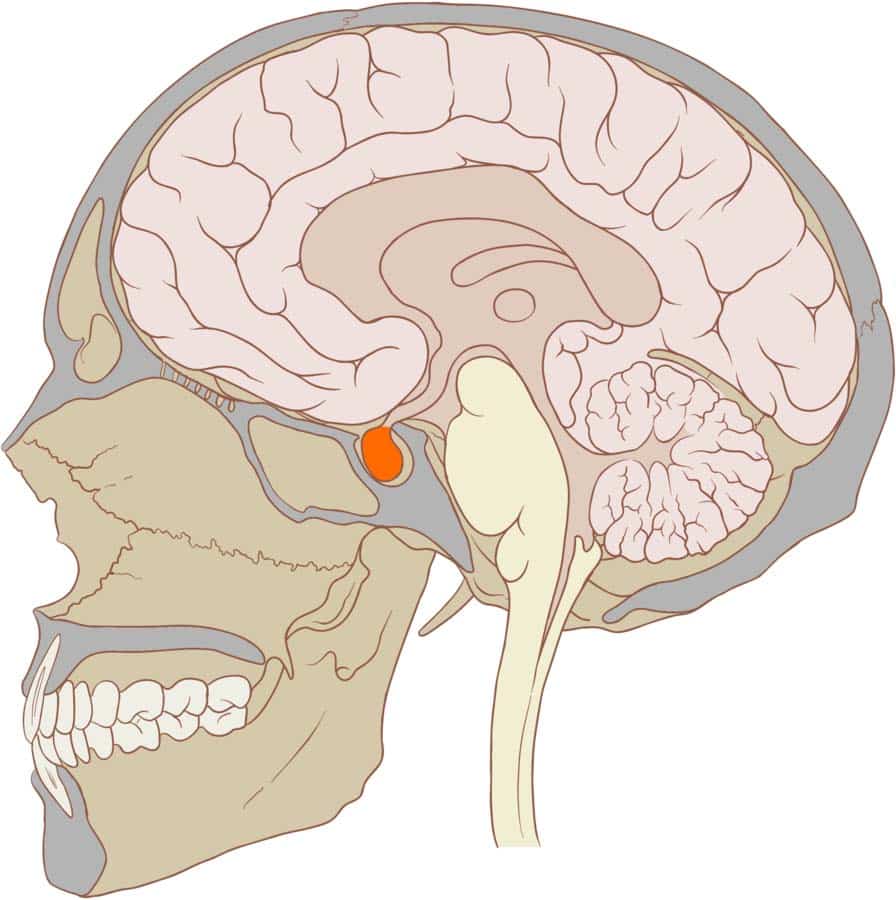
Although it is no bigger than a pea, the pituitary gland, located at the base of the brain just beneath the hypothalamus, is considered the most important part of the endocrine system.It makes hormones that control several other endocrine glands.
The production and secretion of pituitary hormones can be influenced by factors such as emotions and changes in the seasons.
The tiny pituitary is divided into two parts: the anterior lobe and the posterior lobe. The anterior lobe regulates the activity of the thyroid, adrenals, and reproductive glands. The anterior lobe produces hormones such as:
Resultado de imagen de PITUITARY GLANDS
  • growth hormone
  • prolactin, which activates milk production in women who are breastfeeding
  • thyrotropin, which stimulates the thyroid gland to produce thyroid hormones
  • corticotropin, which stimulates the adrenal gland to produce certain hormones
The posterior lobe of the pituitary releases antidiuretic hormone, which helps control the balance of water in the body. The posterior lobe also produces oxytocin, which triggers the contractions of the uterus in a woman having a baby.

Adrenal Glands
The body also has two triangular adrenal glands, one on top of each kidney.
The adrenal glands have two parts, each of which produces a set of hormones and has a different function:
    Resultado de imagen de adrenal GLANDS
  1. The outer part, the adrenal cortex, produces hormones called corticosteroids that influence or regulate salt and water balance in the body, the body's response to stress, metabolism, the immune system, and sexual development and function.
  2. The inner part, the adrenal medulla, produces catecholamines , such as epinephrine. Also called adrenaline, epinephrine increases blood pressure and heart rate when the body experiences stress.


Resultado de imagen de pineal GLANDPineal
The pineal body, also called the pineal gland, is located in the middle of the brain. It secretes melatonin ,a hormone that may help regulate when you sleep at night and when you wake in the morning.


Reproductive Glands

The gonads are the main source of sex hormones. Most people don't realize it, but both guys and girls have gonads.
In guys the male gonads, or testes, are located in the scrotum. They secrete hormones called androgens, the most important of which is testosterone .
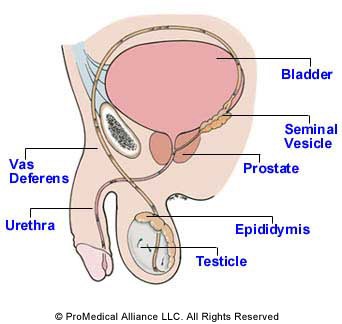
Resultado de imagen de male reproductive glands locationThese hormones tell a guy's body when it's time to make the changes associated with puberty, like penis and height growth, deepening voice, and growth in facial and pubic hair. Working with hormones from the pituitary gland, testosterone also tells a guy's body when it's time to produce sperm in the testes.
A girl's gonads, the ovaries , are located in her pelvis. They produce eggs and secrete the female hormones estrogen and progesterone
Resultado de imagen de female reproductive glandEstrogen is involved when a girl begins to go through puberty. During puberty, a girl will experience breast growth, will begin to accumulate body fat around the hips and thighs, and will have a growth spurt. Estrogen and progesterone are also involved in the regulation of a girl's menstrual cycle. These hormones also play a role in pregnancy.

Pancreas

The pancreas is also part of the body's hormone-secreting system, even though it is also associated with the digestive system because it produces and secretes digestive enzymes.
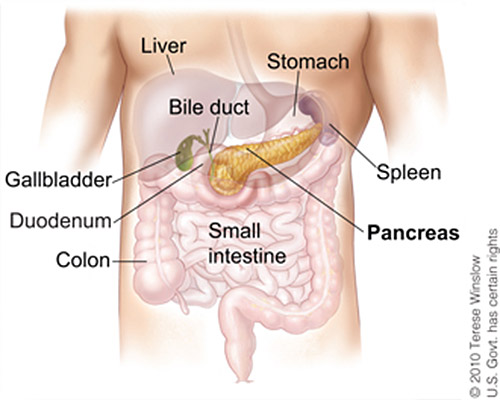
Resultado de imagen de pancreasThe pancreas produces two important hormones, insulin and glucagon. They work together to maintain a steady level of glucose, or sugar, in the blood and to keep the body supplied with fuel to produce and maintain stores of energy.

jueves, 25 de mayo de 2017

THYROID GLAND

The thyroid’s main role in the endocrine system is to regulate your metabolism, which is your body’s ability to break down food and convert it to energy. Food essentially fuels our bodies, and our bodies each “burn” that fuel at different rates. This is why you often hear about some people having “fast” metabolism and others having “slow” metabolism.

The thyroid keeps your metabolism under control through the action of thyroid hormone, which it makes by extracting iodine from the blood and incorporating it into thyroid hormones. Thyroid cells are unique in that they are highly specialized to absorb and use iodine. Every other cell depends on the thyroid to manage its metabolism.


Derived from the Greek word meaning shield, the thyroid is a butterfly-shaped gland located in front of the windpipe (called the trachea) and just below the larynx or Adam’s apple in the neck. It is comprised of two halves, known as lobes, which are attached by a band of thyroid tissue called the isthmus.
During development, the thyroid is actually located in the back of the tongue and has to migrate to the front of the neck before birth.


HORMONES

The two main hormones the thyroid produces and releases are triiodothyronine and thyroxine.The thyroid also produces calcitonin, which helps control blood calcium levels.

The thyroid's hormones regulate vital body functions, including:
  • Breathing
  • Heart rate
  • Central and peripheral nervous systems
  • Body weight
  • Muscle strength
  • Menstrual cycles
  • Body temperature
  • Cholesterol levels
MOST COMMON ILLENS
Hypothyroidism , by contrast, stems from an underproduction of thyroid hormones. Since your body's energy production requires certain amounts of thyroid hormones, a drop in hormone production leads to lower energy levels. Causes of hypothyroidism include:
  • Hashimoto's thyroiditis : In this autoimmune disorder, the body attacks thyroid tissue. The tissue eventually dies and stops producing hormones.
  • Removal of the thyroid gland
  • Exposure to excessive amounts of iodide
  • Lithium
Untreated for long periods of time, hypothyroidism can bring on a myxedema coma, a rare but potentially fatal condition that requires immediate hormone treatment.

hyperthyroidism is due to an overproduction of thyroid hormones, but the condition can occur in several ways:

  • Graves' disease: The production of too much thyroid hormone.
  • Toxic adenomas
  • Subacute thyroiditis: Inflammation of the thyroid 
  • Pituitary gland malfunctions or cancerous growths in the thyroid gland

BIBLIOGAPHY:


ENDOCRINE SYSTEM
In general, the endocrine system is in charge of body processes that happen slowly, such as cell growth. Faster processes like breathing and body movement are controlled by the nervous system. But even though the nervous system and endocrine system are separate systems, they often work together to help the body function properly. 
Resultado de imagen de endocrine system


The foundations of the endocrine system are the hormones and glands. As the body's chemical messengers, hormones transfer information and instructions from one set of cells to another. Many different hormones move through the bloodstream, but each type of hormone is designed to affect only certain cells.

WHAT IS A GLAND?

gland is a group of cells that produces and secretes, or gives off, chemicals. A gland selects and removes materials from the blood, processes them, and secretes the finished chemical product for use somewhere in the body.
Some types of glands release their secretions in specific areas. For instance, exocrine  glands, such as the sweat and salivary glands, release secretions in the skin or inside the mouth. Endocrine glands, on the other hand, release more than 20 major hormones directly into the bloodstream where they can be transported to cells in other parts of the body.
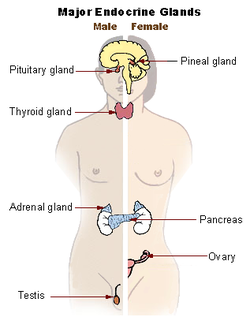
The major glands that make up the human endocrine system include the:
  • hypothalamus
  • pituitary gland
  • thyroid
  • parathyroids
  • adrenal glands
  • pineal body
  • reproductive glands (which include the ovaries and testes)
  • pancreas

martes, 9 de mayo de 2017

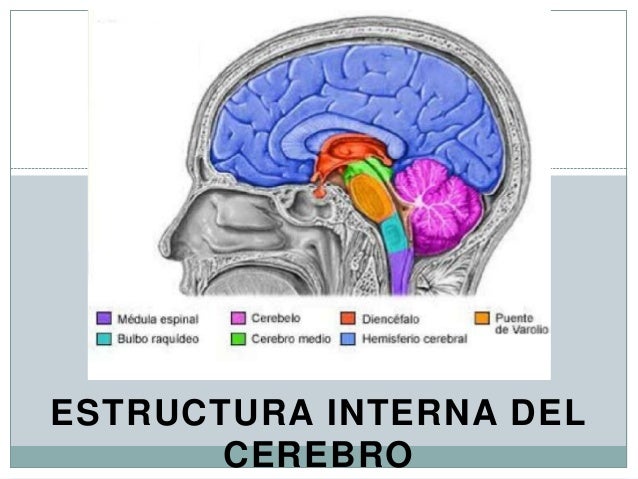
PRÁCTICAS LABORATORIO:CEREBRO
Resultado de imagen de encéfalo
Resultado de imagen de encéfalo estructura interna


1¿Cuántas meninges existen?¿Qué papel desempeñan?

Hay tres tipos,dura madre,aracnoides y pia madre que cubren todo el sistema nervioso central, añadiéndole una protección blanda que complementa a la dura de las estructuras óseas.

2¿Por qué nuestro cerebro tiene rugosidades?¿Cómo se llaman?
Las “arrugas del cerebro” 
están formadas por dos tipos de estructuras. Surcos, que corresponde a las hendiduras y giros, aquellas zonas en que las arrugas se muestran elevadas.

La zona arrugada del cerebro es la corteza cerebral, aquella que está más arriba y constituye la capa exterior. Se cree que parte de las arrugas se crean por un crecimiento rápido y diferenciado de la corteza cerebral, en que la materia gris crece más rápido que la blanca, formando así los pliegues para no verse limitada.

3¿Podrías indicar si existe alguna diferencia entre la disposición de la sustancia blanca en el cerebro y el cereblo con respecto a la médula espinal?

La sustancia blanca está compuesta de fibras nerviosas mielinizadas, las cuales contienen sobre todo muchos axones, Esta modula la distribución de los potenciales de acción, actuando como un retransmisor y coordinando la comunicación entre las diferentes regiones del cerebro.

La sustancia gris está compuesta por las somas y cuerpos neuronales, que no poseen mielina, y se la relaciona más con el procesamiento de la información. 


KIDNEY DISECTION
Resultado de imagen de KIDNEY parts
QUESTIONS:

1What is the main function of the kidney?

The kidneys perform the essential function of removing waste products from the blood and regulating the water fluid levels

2Describe the pathway of blood through the kidney.

Blood flows through the kidneys at a very high rate. A person's entire blood volume passes through the kidneys 20 times per hour.
All of this blood is handled by a specialized system of arteries and veins. Arteries carry blood into the kidneys. 
Veins carry blood back to the heart.
From the abdominal aorta, blood enters the kidney through the renal artery.
The renal artery divides into a number of segmental arteries.
The segmental arteries divide into lobar arteries.
The lobar arteries divide into interlobar arteries that travel between the renal pyramids.
The interlobar arteries branch into arcuate arteries that travel between the cortex and medulla.
From the arcuate arteries, the blood is carried into microscopic arterioles that serve the nephrons.

3How did your distinguish between the renal atery and renal vein?

The renal artery comes off the aorta (the largest blood vessel in the body) carrying oxygen and nutrients to the kidneys. 

After going through the kidneys, the blood has less oxygen, and also contains waste products from the kidneys. These are the renal veins, and return to the heart for more oxygen. 

Arteries generally have thicker walls because it has to deal with a higher pressure (because it has to get to the whole body) 

Veins are generally thinner because they are a much lower pressure system.

4Which area of the kidney contains the glomeruli and Bowman´s capsules?

At the tubular component of a nephron.

5In which part of the kidney does the majority of water readsorption occur?

In nephrons

6What structure carries urine out of the kidney and where does it go?


CASE nº 7

1What is Rosa illnes?

Rosa illnes is meningitis.

2What causes it?

Meningitis is generali caused by infection of viruses,bacteria,fungi,parasites and certain organisms.
Anatomical defects or weak immune systems may be linked to recurrent bacterial meningitis.
In the majority of cases the cause is a virus.However,some non-infectious causes of meningitis also exist.

3List of symptoms signs and finding associated with the disease and what condition they present Rosa.

Meningitis is not always easy to reconize.In many cases meningitis may be progressing with symptoms at all.
In its early stages,symptoms might be similar to those of flu.
However people with meningitis can become seriously all within hours,so it is important to know the signs and symptoms.
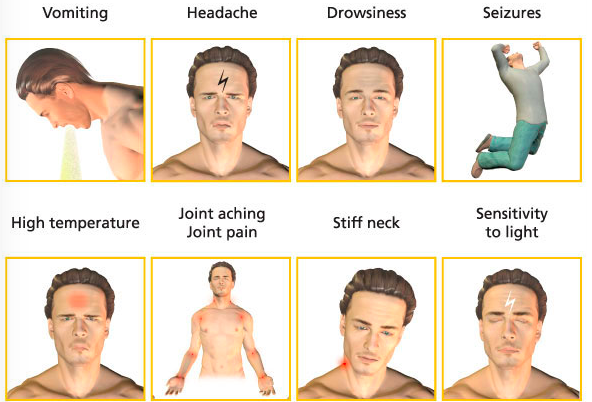
Early symptoms of meningitis include:
    Resultado de imagen de symptoms meningitis
  • Vomiting
  • Nausea
  • Muscle pain
  • High temperature
  • Headache
  • Cold hands and feet
  • A rash that does note fade under presure
  • Chills
  • Photophobia
  • Rigidity in the nenck
4. Describe the treatment of the disease and its prognosis.
The treatment depends on the type of meningitis you or your child has.

Acute bacterial meningitis must be treated immediately with intravenous antibiotics and, more recently, corticosteroids. This helps to ensure recovery and reduce the risk of complications, such as brain swelling and seizures.

The antibiotic or combination of antibiotics depends on the type of bacteria causing the infection. Your doctor may recommend a broad-spectrum antibiotic until he or she can determine the exact cause of the meningitis.

Antibiotics can't cure viral meningitis, and most cases improve on their own in several weeks. Treatment of mild cases of viral meningitis usually includes:
  • Bed rest
  • Plenty of fluids
  • Over-the-counter pain medications to help reduce fever and relieve body aches
Your doctor may prescribe corticosteroids to reduce swelling in the brain, and an anticonvulsant medication to control seizures. If a herpes virus caused your meningitis, an antiviral medication is available.
If the cause of your meningitis is unclear, your doctor may start antiviral and antibiotic treatment while the cause is determined.

This are two foldables about the nervous system to improve your knowledge in that part of the first floor: